
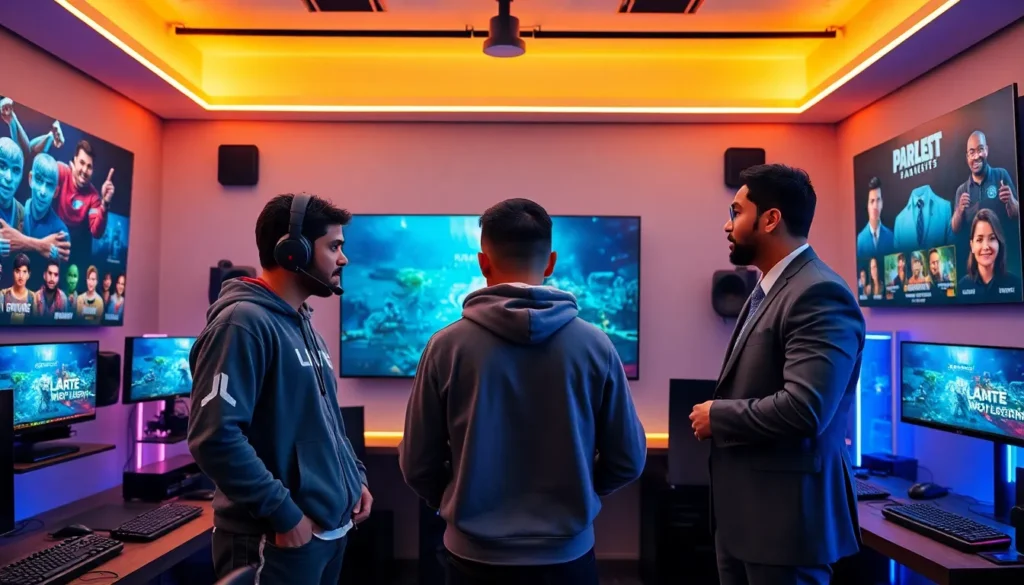
Gaming culture has undergone tremendous transformation over the years. Once a niche hobby for misfits and nerds, it has morphed into a global phenomenon that even your grandma might mention in passing. And yeah, anyone who thinks video games are just for kids clearly hasn’t been paying attention. Let’s jump into the rollercoaster ride that is the evolution of gaming culture, where pixels meet personality, and epic quests unfold every time someone logs in.
Historical Context of Video Games

To understand gaming culture today, one must first glance back at its roots. Video games began in the 1950s with simple creations like ‘Tennis for Two’ and have evolved to create immersive worlds much more complex than the brick-and-mortar arcades of yore. The 1980s introduced iconic titles like ‘Pac-Man’ and ‘Super Mario Bros,’ changing the gaming landscape forever. It wasn’t just about high scores anymore: these games featured rich characters and engaging narratives.
The 1990s saw the rise of 3D graphics and the introduction of consoles like PlayStation and Nintendo 64. This era also gave birth to online multiplayer gaming, letting people connect over long distances. By the 2000s, the gaming culture became more mainstream, thanks to the marketing genius behind franchises like ‘Halo’ and ‘Grand Theft Auto.’ Suddenly, video games were no longer reserved for basement-dwellers but celebrated at awards shows and in pop culture.
Throughout these decades, games evolved from simple one-player experiences to complex narratives and multiplayer epics, setting the stage for community-driven engagement.
The Rise of Online Gaming Communities
As technology progressed, so too did gaming communities. With the advent of the internet, gamers could finally connect beyond their local arcade or living room. Forums, chat rooms, and the advent of consoles equipped with online capabilities transformed how gamers interacted. Websites began popping up devoted to everything from reviews and walkthroughs to fan theories.
Around the early 2000s, games like ‘World of Warcraft’ hit the scene, creating vast online worlds where players forged friendships, alliances, and sometimes intense rivalries. The sense of community flourished as gamers found common ground in guilds and clans. Nowadays, platforms like Discord and Reddit act as modern-day forums where players can share experiences, tips, and memes, knitting a fragile yet lively digital tapestry.
Today’s gaming communities embrace diversity and inclusivity, welcoming players of all backgrounds. Established names often engage with these communities, blurring the line between developer and player, creating a sense of trust and loyalty.
Influence of Streaming and Content Creation
Streaming platforms such as Twitch and YouTube have revolutionized how gamers consume and share content. Gamers are no longer just players: they are content creators, letting audiences peek into their gaming skills, personalities, and lives. With millions tuning in for live gameplay or commentary, streaming has become a career path for many, transforming gaming into not just a pastime but a viable profession.
Key Genres Shaping Modern Gaming
Genres like battle royale, RPGs, and simulation games have evolved dramatically thanks in part to these platforms. Battle royale games like ‘Fortnite’ became cultural touchstones, integrating memetic humor, dances, and even crossovers with pop culture icons, thereby ensuring their place in not just gaming, but broader media.
Impact of Indie Games on the Industry
Interestingly, the indie game scene has also seen a significant surge in popularity. Smaller teams or even solo developers are creating groundbreaking experiences that rival the big-budget titles. Games like ‘Hades’ and ‘Celeste’ emphasize storytelling and innovative gameplay mechanics, proving that creativity knows no bounds. These indie creations often find their way into live streams, further accentuating the connection between content creation and gaming.
Technological Advances in Gaming
The gaming industry thrives on innovation, and technological advances have spurred remarkable progress. From graphics rendering to AI advancements, tech evolution has set a higher standard. Consider virtual reality, once a distant dream, it now immerses players in stunningly realistic environments, making them feel as if they are truly part of the action.
Also, online platforms like Steam and the Epic Games Store have revolutionized the way games are distributed, granting players access to a vast library of titles at their fingertips. Just a simple click, and one can jump into new worlds or relive classic adventures.
Cloud gaming is also on the rise, allowing gamers to play titles without needing an expensive console or high-end PC. Services like Google Stadia and NVIDIA GeForce Now are pushing these boundaries further, aiming to make gaming accessible to all. As these technologies mature, they promise an even richer, more diverse gaming culture.
The Future of Gaming: Trends to Watch
What does the future hold for gaming culture? Well, it’s exciting, to say the least. The integration of AI promises to create smarter, more responsive game worlds. Imagine NPCs that react uniquely based on player choices and interactions, or storylines that adapt in real-time.
New hardware innovations, such as the potential for augmented reality gaming, may combine the virtual and physical worlds, creating experiences previously thought impossible. Picture this: you’re battling monsters in your living room as the furniture morphs into your gameplay environment.
As the industry becomes more inclusive, voices previously marginalized will continue to find representation in games, enriching storytelling and overall culture. Esports is expected to grow even further, transitioning into not just a spectator event but an integral part of many communities, similar to conventional sports.


